Barge No. 19
19071970
- Purpose
- Transhipment of cargo from ships in the Port of Copenhagen to land or to other ships.
- Build by
- Shipbuilder A. Jensen in Svendborg for the shipping company DFDS.
- Original crew
- Barge skipper and deckhand
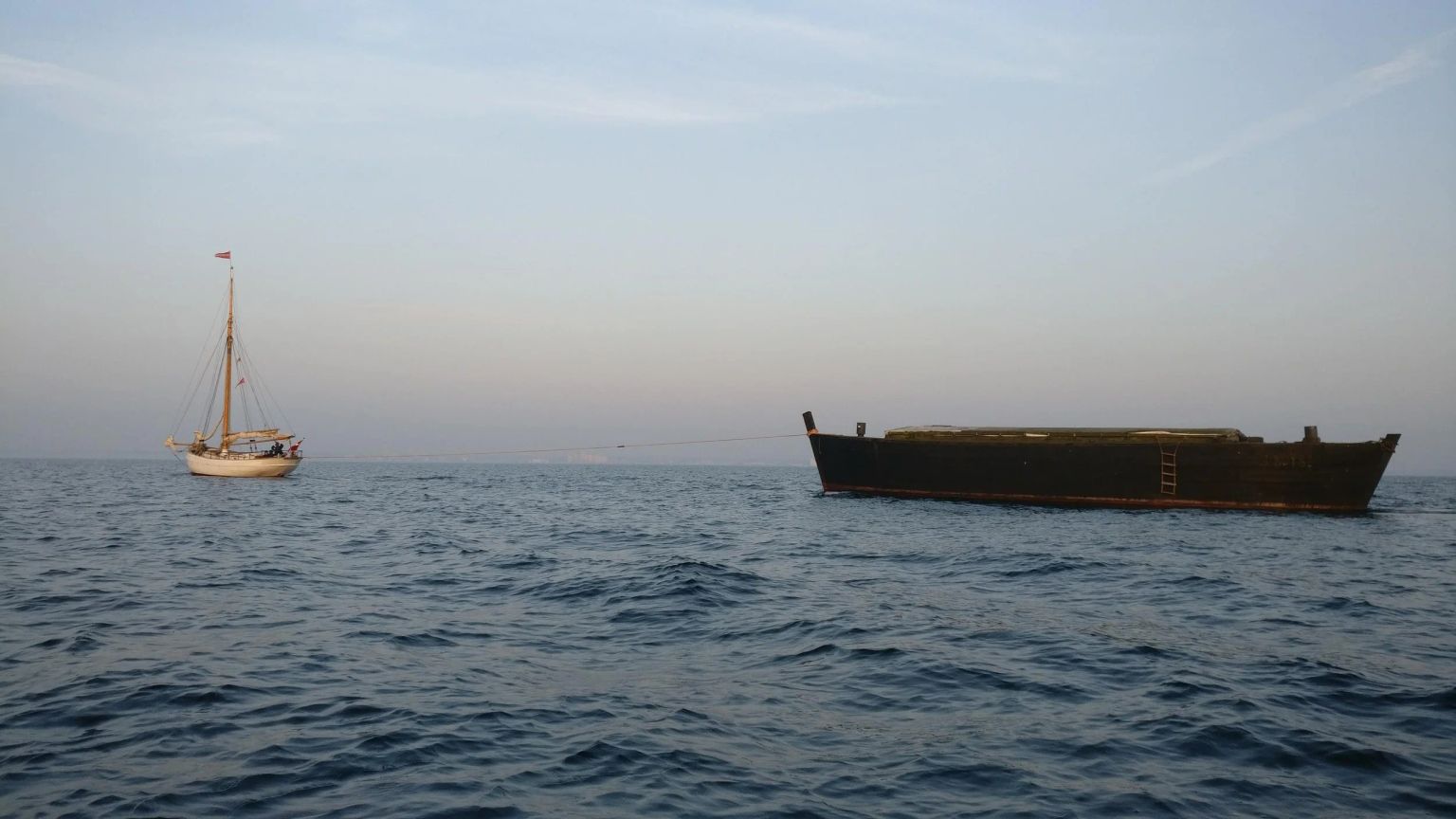
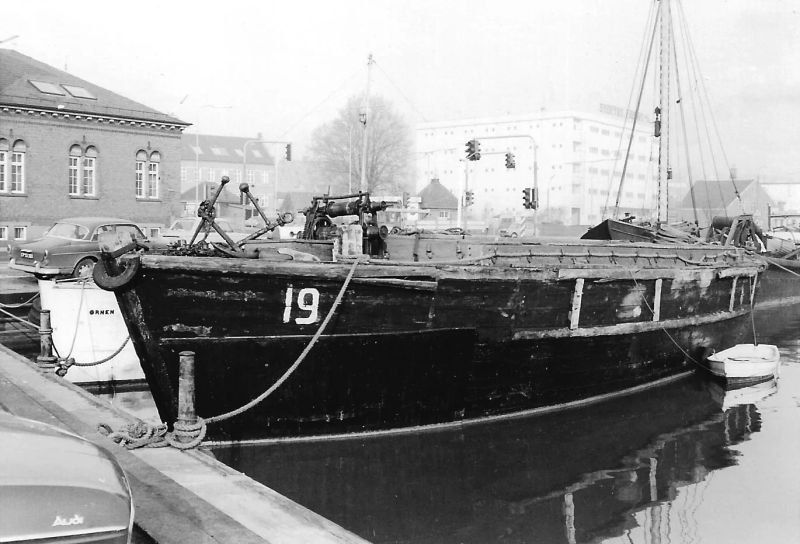
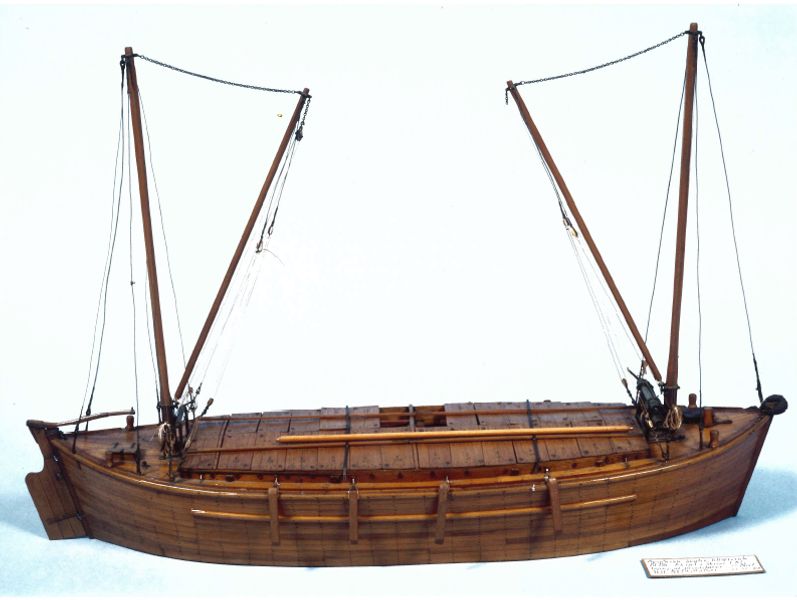
Barge No. 19 has worked harder than most ships in Copenhagen harbour, even though it has neither an engine nor sails. The barge spent decades ferrying cargo back and forth between ships and the quay, but in 1970 it was given a new role for the National Museum of Denmark.
The barge was the port’s workhorse
Before containers took over, it was barges like No. 19 that kept things running in the Port of Copenhagen. The large barges were loaded with general cargo and towed to the provincial ports – and returned with agricultural produce. It was not glamorous work, but it was indispensable. The position of barge skipper was a coveted one: if you had sailed for a few years and secured a job with DFDS, you had landed yourself a permanent post.
The barge had no engine, so when it needed to be moved around the harbour, the barge haulers came into play. They were hired for each individual job and were named after the barge pole, the boat hook they used to haul the barge along the quay. For longer trips, a deckhand was hired.
Spartan on the outside, cosy on the inside
In terms of layout, Barge No. 19 was divided into three sections: a cable room at the bow, a large cargo hold amidships, and a crew cabin at the stern. The cabin was not exactly a luxury cabin, but it was nothing to sneeze at either, with two berths, oak-grained panelling, a plush sofa and a tiled stove for both heating and cooking. Graining, incidentally, is a painting technique that makes cheaper wood look like oak or a wooden surface look like marble. A craft in its own right.
The hull was black-tarred, but the top two planks were sanded smooth and oiled. And at the bow sat the DFDS emblem: a white Maltese cross on a blue background. Barge No. 19 is built with oak frames and larch planks, a beech floor and an oak inner hull.
From DFDS to the National Museum of Denmark
By the late 1960s, DFDS had 33 barges in its fleet – 16 made of steel and 17 of wood. In 1970, they decided to hand over Barge No. 19 to the National Museum of Denmark, and she has been moored in Nyhavn since 1976. Here, the hold was given a new purpose as a classroom, linked to the exhibition on the galess Anna Møller. It was subsequently used as a workshop for the museum’s collection of vessels.
Today, Barge No. 19 lies on dry land at our shipyard in Holbæk, awaiting restoration. A temporary roof made of roofing felt keeps the weather out whilst we gather the resources to give the barge a new lease of life.
Vessel details
Length on deck: 21.1 m
Width: 5.8 m
Draught: 0.5 m
Moulded depth: 2.4 m
Empty weight: 45 tonnes
Tonnage: 63.5 GRT
Deadweight: 100 tonnes
Engine: None
Come and see Barge No. 19 at our shipyard in Holbæk